Thursday, June 28, 2012

Ann


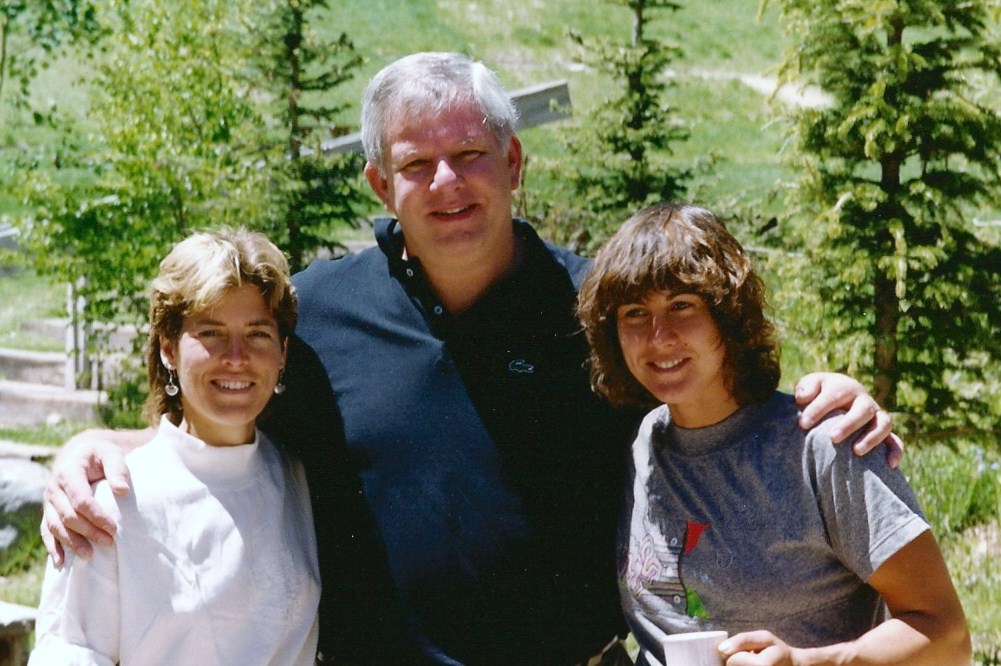
The Dalai Lama was tired and wanted to go to bed.  He’d been on a very long flight and he just wasn’t up to talking to another journalist…even if it was Ann Curry from the Today Show.  Lucky me, I was elected to tell Ann and her producer that the interview they had been waiting all day to get wasn’t going to happen until the next morning. At least she was first in line…that was the only good news I had…so I lead with it.

 Ann took the news pretty well, being the professional that she is.  For me, with the open time she now had on her hands, we could have a nice chat and get to know each other a bit. Like me, she was raised in a military family. Her career started after she graduated from the University of Oregon.  The tie to the Northwest, where she got her first job in television, seemed quite important to her and a solid connection for us.

 That conversation was the beginning of a relationship that has lasted for several years now.  It even saw us through two Olympics together…Beijing and Vancouver.  We were planning to connect in London and based on today’s news, it appears that might still happen.

 Ann is a warm and engaging person.  She is intelligent, well read and intensely focused.  Her deep-seated humanitarianism has taken her all over the world where there is conflict and strife. That is what brought her to the interview with the Dalai Lama on his trip to the US amid tensions in his home country of Tibet. It was the first of three interviews she has done with His Holiness and all of them have been very revealing about his views on politics and human behavior.

 A chance meeting on a connecting flight from Tokyo to Beijing gave Ann and me hours to catch up on our travels.  She loved hearing about the mountain and ocean projects that I have worked on because of her concern for the environment.  When we arrived in Beijing, we talked daily and then she invited Jane and me to the Today Show set.  We actually sat in two director’s chairs at the side of the stage.  We felt like royalty, thanks to Ann, and then talked with her well into the night in the shadow of the Bird’s Nest stadium.

 In Vancouver, she brought me right onto the Grouse Mountain set, standing next to her with the "gang" as they went to commercial.  We sat by the fire during the breaks and caught up on her preparations for the next Dalai Lama interview.  It was in that conversation that she first mentioned to me that there might be something new in the offing for her career. It may have been in anticipation of the impending decision for her to move into the co-host position, which happened a year later.  It was clear, however, that she had other plans in mind and they focused on her strong interest in righting the wrongs of the world and helping those truly in need.

 On my regular trips to New York, we’ve connected on the Today Show set and had long interesting talks over tea about the problems of the world that we knew we couldn’t solve.  But we cared.  She cared.  That may be one of the reasons she is leaving the co-host job at the Today Show. She has serious concerns in a business that is becoming more frivolous and celebrity-focused every day.  Ann may just be too good a journalist and human being to laugh and play games while sitting in the chair.

 In our last email exchange, she said “Just trying to do good for others, you know?” And I do know.  I think she liked being the co-host but, even when she was doing that, she was the first to volunteer to go anywhere in the world that people were suffering or in trouble.  I have great respect for her as a network news person and wish her all that is good in the world, however this turns out.  She deserves it.  I hope to see her again sometime soon and be one of the thousands who want the best for her and can say it in person. Damn the ratings!

Wednesday, June 6, 2012

26 Hours


He lies next to his brother. He would have wanted that, I think. Robert Francis Kennedy carried a huge burden for almost five years after his brother John was assassinated. Bobby was up to it though.

It was an electric time in DC. I was interning on Capitol Hill and quietly (because my father was a military man at the Pentagon and it might have rubbed off on him) but avidly supporting Bobby candidacy for President. Those times were the greatest influence on my political beliefs throughout my life.

I stayed up late to watch the primary returns in California. It was such a rush to see Bobby win and non-stop television coverage was in vogue so the cameras followed him off the podium and into the kitchen. Chaos ensued and you could hear the pops of the gun.

It was a surreal sight and the thought of another assassination was mind-boggling. Yet there it was, right before our eyes.

Not much is said today about the next 26 hours, but Bobby hung on. There were brief moments of real hope that he would survive.  However, the reports from the doctors were increasingly discouraging. It was excruciating as we tried to occupy ourselves between hourly reports. Capitol Hill and the congressional offices there are normally alive with the hustle and bustle and constant chatter of lawmaking.  That day it was quiet as a church.

He died on the morning of June 6 and a day later, Bobby’s body arrived in New York.  The Requiem at St. Patrick’s Cathedral made you feel as though you were one of the mourners.  The television networks didn’t take a breather throughout the entire ordeal.  Teddy Kennedy stepped out the shadows that day and his eulogy for his brother gave me chills.

His body was moved by private train to DC with thousands lining the trackside to pay their respects. I  remember people placing coins on the tracks to be flattened into remembrances by the train. It had to move so slowly that they didn’t arrive to Arlington Cemetery until well after dark.  The service was brief and very understated.  The next morning the small white cross was all that remained when I took the photo above (with my Kodak Instamatic) and, to this day, only a small plaque has been placed on the burial spot.


Robert F. Kennedy and his brothers John and Teddy had great influence on our country.  They are all gone now. So much of what and who we are as a nation was reflected in the lives of those men.  There were other assassinations that have marred our history. JFK and Martin Luther King, both were stopped short of their goals. Other Presidents, Lincoln, Garfield and McKinley were shot by political idealists.  The details of their deaths are dwindling to postscripts in the history books. But for those of us alive in the 60’s, that 26 hours before Bobby died will not soon be forgotten. Nor will how those times shaped our lives.

Monday, May 28, 2012

Quiet Remembrance

My father had a full military funeral.  He wanted it. The US Army shaped his life.  It was his career.  Had he still been stationed in Washington, DC, at the pentagon, I think he would have been buried in Arlington Cemetery.

Dad was drafted right after high school and received a battlefield commission in Europe.  He fought in D-Day and the Battle of the Bulge. After 20 years as an officer, he did another 20 as a civil servant in the Department of Defense.

He didn’t talk much about the friends he lost in the wars.  He had lots of friends in the military who he hunted and fished with over the years  but I never heard a story from him about friends dying in service.

He was always quiet on Memorial Day. I know he was thinking and remembering but I don’t know about who or what.  Late in his life after I had served, he did talk more about his tours.  The stories were mostly safe and humorous.  Nothing very scary, though.

I remember the friends I’ve  lost to war.  The memories are vivid and I think about them more than just on Memorial Day.  But then, I guess I don’t talk much about it to my friends.  It’s a personal and private thing.  I look at old pictures and try to focus on good thoughts.

But there is nothing good about losing a loved one to war.  Being a patriot is defending one’s country.  All those who’ve served in the military are patriots.  Today, we’re still losing friends and loved ones and, regardless of our thoughts about the politics of war, there are young men and women defending our rights and placing their lives on the line for this country.

Today is a day for quiet remembrance.  Spend a few moments away from the grill and TV and think about what our freedom means and what and who it takes to have it.  I hope there comes a time when no one has to die for us to have these freedoms.  Until then those who have given all deserve our profound respect and gratitude.

Wednesday, April 25, 2012

Knute

When people came from other places to the Seattle World’s Fair in 1962, Knute “Skip” Berger is the person they expected to meet…a true Northwesterner, independent, curious, smart and a little bit “bushy”.  Skip and I first got know each other in the 1900’s (you remember them) when our offices were in the same building on the Seattle Waterfront in what is called Pioneer Square.  We used to run into each other as we walked the alley behind our building to lunch or home.
Just over a year ago, the Space Needle chose Skip to write the definitive book on the Space Needle for its 50th Anniversary and I whole-heartedly concurred.  We had a book deal celebration at the Needle with publisher Petyr Beck on the left, Skip, me and Mary Bacarella, VP of Branding for the Needle.Skip is a great writer, journalist and, above all, a World’s Fair aficionado par excellence.  He attended the Seattle Fair in 1962 and has been to every World’s Fair since then.
We ‘ve gotten to know each other better during the past year while Skip assumed his title of “Writer-in-Residence” atop the Needle with chairs and a table where he could write and interview.  I helped him open some doors to people and stories that make the Space Needle really come to life.
During the year, we both met many of the founding family members, people who actually built the Needle and those who drew attention to it here and around the world.  When Astronaut Buzz Aldrin came to help celebrate the 50th Anniversary, Skip was actually a bit in awe of the guy and wrote about it. I accompanied him to many interviews for the book. One that comes to mind was a meeting with one of the original builders and his family.  I got to the location early in a driving rain storm.  Shortly, a figure in a thin hooded parka came out of the mist down the street.  It was Skip, looking somewhat like an otter with his hair and beard drenched.  Neither snow, nor rain, nor heat…you know the line.
Last weekend on April 21, Seattle celebrated the 50th Anniversary of the Space Needle and the opening of the Fair.  It was a glorious day in every respect.  I’ll write more about it later but one of the highlights for me was seeing the smile on Skip’s face as he signed copies of his just-delivered book, Space Needle, The Spirit of Seattle.  He said he was “as high as the Space Needle”.  We all were. It’s a trip into the heart and history of our city.
At noon on Saturday, Jeff Wright, chairman of the Space Needle and son of its builder Howard S. Wright, and his whole family hosted a Legacy Luncheon at the Needle.  A couple hundred people with very close ties to the Space Needle and the World’s Fair had the time of their lives reminiscing. Pictured here is Jeff Wright with two ironworkers who actually bolted the Needle together. In the middle of the festivities, there was a short program with three speakers…Jeff Wright, Mayor Mike McGinn and, you guessed it, Knute “Skip” Berger.  The text of Skip’s remarks follows and, if it doesn’t entice you to read his book, you’re not paying attention.  I’m proud to call Skip a friend and colleague. He represents the soul of our city. He makes me even more proud to call Seattle my home.  It’s a very special place on this planet.


The Space Needle 'has a thousand fathers'
By Knute Berger
Editor's Note: The following remarks were made at the Space Needle's 50th Anniversary Legacy Luncheon on April 21, 2012. The event marked the official opening of the Needle and the Seattle World's fair in 1962. Also speaking were Space Needle chairman Jeff Wright and Seattle Mayor Mike McGinn. Attending were individuals and families who played roles in the fair and Needle's history, from ironworkers to engineers, from elevator operators to executives. There were many familiar names represented: Gandy, Carlson, Rochester, Wright, Steinbrueck, Graham, Minasian, Dingwall, Clinton, Moffett, Rockey, to name a few. This was a day to pay tribute to the amazing people and unique accomplishments that gave Seattle not only a fair to remember, but a permanent civic center and an international icon.
As the Seattle world's fair was being built, President John F. Kennedy quoted an old saying in the wake of the Bay of Pigs debacle in Cuba: "Victory has a thousand fathers, defeat is an orphan."
Century 21 and the Space Needle were victories — huge successes. They are certainly not orphans. They have a thousand fathers, and mothers, and children and grand children — including you, the people attending this 50th anniversary Legacy Luncheon. You represent their vision and their living legacy, their memory and impact. You were witness to amazing events and part of an important story in the history of our city, our country, and the world.
A year ago, I was hired to write the story of the Space Needle for its 50th anniversary. I was given the title of Writer-in-Residence at the Needle and  a desk and chairs on the Observation Deck which I used to conduct interviews, write for the Needle's blog, and to meet the people who pass through the "Eye of the Needle" on a daily basis.
I quickly realized three things on this project. First, that I couldn't complain about the deadline. If the Space Needle was built in a year, I certainly could research and write a book about it in a year. The Needle sets the bar for all of us.
Second, I came to understand that the Needle, like Century 21, has no single story. How could it? More than 50 million people have visited the Space Needle since it opened in 1962. It has been a place featuring births, anniversaries, engagements, marriages, first dates, and even a few deaths. When the flag was raised on the 10th anniversary of 9-11 last fall, it was a statement about endurance, remembrance and hope. The Needle has been at the center of Seattle's civic and cultural life for half a century. I met more than one person who told me proudly, "my father built the Space Needle."  No one is putting the Needle up for adoption.
Although some have tried to steal it away. You might remember that the city of Fife offered to buy and move the Space Needle there in the late 1970s. Some said they'd change its name to the "Fiffel Tower." As Walt Disney predicted when he visited the Seattle fair, Needles would soon be cropping up everywhere. This one is staying where it is.
The third thing I realized was that if you want to experience the thrill of the world's fair, if you want to experience the wonder, the fun, the chaos, the energy, there's one place in America where you can still do it. America has not hosted a world's fair since 1984, and likely won't for many years, if ever. Generations of Americans are growing up with no sense of what world's fairs are like, or even that they are still happening around the world, which they are. There's one this summer in South Korea, in a coastal city not unlike Seattle in '62.
But our fair is still here to remind Americans of the power of such events to inform, entertain, to reshape cities, to uplift people with science, technology, the arts, even Belgian waffles. The Seattle Center has some of the characteristics of a permanent fair.
If you want to experience what a world's fair is like, go to the top of the Needle on a crowded summer day. You will hear the gasp of newcomers as the elevators lift-off. The restaurant still turns and the view still stuns. You will meet passengers from around the world as they look out on the amazing city and landscape that inspires and nurtures us, and hear them exclaim in many languages. As King Olav of Norway said when he saw the view, "Dette var flotte" — "That was impressive."
He could have been speaking of the entire Century 21 legacy.
Wonder, inspiration, fun, aspiration. The Needle and the fair were offered as antidotes in a world threatened by nuclear war. It was a statement to the world: While you build walls and guard towers and bomb shelters, in Seattle we build global vistas and dream of new frontiers. The utopian vision still lives in our civic discourse.
I fell in love with the Needle, when I first saw it from the Smith Tower, as it was being built in 1961. I was an 8-year-old Cub Scout. You could get a clear view of the Needle from the Smith Tower back then; there were no skyscrapers in between. To me, the Needle was the future, being built right there on the horizon, in my home town. It was being built by some of you, for a fair that galvanized the city as nothing else has before or since.
I'm here today to thank you fathers, mothers, families and friends of the fair and Needle, for what you have done for the city. It was an honor to tell my version of the Space Needle's story because it embodies the collective story of Seattle's spirit.
Thank you.
Knute Berger is Mossback, Crosscut's chief Northwest native. He also writes the monthly Grey Matters column for Seattle magazine and is a weekly Friday guest on Weekday on KUOW-FM (94.9). His newest book is Pugetopolis: A Mossback Takes On Growth Addicts, Weather Wimps, and the Myth of Seattle Nice, published by Sasquatch Books. In 2011, he was named Writer-in-Residence at the Space Needle and is writing the Needle's official 50th anniversary history. You can e-mail him at mossback@crosscut.com.

Thursday, April 19, 2012

Big Doin's

Spending my summers on the farm growing up while my dad was moving every year in the Army, I learned a lot from my grandmother.  One of her favorite terms was “Big Doin’s”.  Whenever she saw a gathering with lots of cars and people around, she would say “There’s Big Doin’s over there.”  The family joke that my dad and uncle always told was when she made that exclamation one time and they drove a mile to get closer to the cluster of cars which turned out to be a junkyard with “no doin’s” at all.
Well, there is going to be “Big Doin’s” in Seattle this summer, thanks mostly to the “Big Doin’s” in the summer of 1962 when the Space Needle and the Seattle World’s Fair opened.  Earlier this week, we brought out three generations of World’s Fair and Space Needle Seattleites to begin painting the Needle back to its original “Galaxy Gold” color from the Fair. It got everyone in town excited about all the activities coming up, starting with the official 50th Anniversary this weekend on April 21.
From now until the end of year, we’ve got a series of openings, events and activities that qualify as “Big Doin’s” and we’re knee-deep in all of them.  I’m outlining all this commotion mostly to let you know we’ll be distracted from time to time.
Space Needle’s 50th Anniversary—it coincides with the 1962 World’s Fair celebration, which means a lot to Seattle.  That really marks the time when Seattle became a world city and has grown ever since.  Elvis even came to the Fair and made a movie about it.  The Needle has become an icon for our city around the world and a beacon to our future.  It’s always leading the way.
University of Washington, Professional and Continuing Education Centennial comes next.  It’s nestled inside of the University’s 150th Anniversary and it celebrates the tens of thousands of local citizens who have come to the University with life-long learning as their goal.  We’re instituting a way for graduates to continue their education for years to come. And bring all who have participated over the years together in a series of reunions and gatherings.
Space Race 2012—the brain-storming session that spawned this idea started by talking about the success of sending Visitor Number 45 Million to our sister landmark, the Eiffel Tower.  Because of the success of that promotion, we began to discuss other places we could send people and someone said “How about sending them into space?”  We all looked at each other and asked “Could we really do that?”  The answer was yes and, since then, we have gone from 50,000 online entries to 1000 invitations to send a video about why you would want to go into space, to 20 semi-finalists who were voted for online and now it’s down to 5 people from around the country who will compete in tests of skill to determine the ultimate winner.  Astronaut Buzz Aldrin will open the envelope in May to congratulate the winner.
Not slowing down a bit, King Tut hits town on his final stop ever in the US next.  He’s going back to Egypt to his permanent home and will not ever tour again.  I still have the program from his first visit to Seattle over 30 years ago.  The real significance of that is that it tells me there is entirely too much “stuff” in my basement.  Being the marketing member of the board at the Pacific Science Center, host for the visit, makes this exceptionally sweet.  Advance ticket sales and exposure for his visit are way ahead of any previous venues.  The city is even changing the name of King Street Station to King Tut Street station during the 6 months of the visit.  Exciting!
Then comes Chihuly Garden and Glass—this spectacular exhibition has been almost 3 years in the making.  When a space became available next to the Space Needle, its owners approached renowned artist Dale Chihuly with the idea of a major exhibition of his work there.  We faced the test of Seattle’s process, gained permission from the city and have been working 24/7 since August to open in May.  It is all coming together in an amazing way and the artwork is being installed as I write this.  The most comprehensive exhibition of his work will move Seattle’s position in the world of art up a significant number of notches and those of us involved will be very proud to help open its doors to everyone.
Never far from the mountains, at the same time, we’re working on a PBS documentary about the love and attraction of the mountains.  We’re using the life of famed mountaineer and consummate guide, Lou Whittaker, whose career has spanned over 60 years, as the foundation for this program.  Lou is highly respected and revered in outdoor circles and he is a close and valued friend.  This documentary for network placement next winter or spring pays appropriate homage to Lou and his influence on climbing and guiding around the world.
All this is just in time to connect with the XXX Olympiad in London.  We’ve worked on the last several games with the local organizing committees including Beijing and Vancouver, BC.  We continue to talk with our Olympic contacts and have several lines in the water that we hope will bring us onto the scene in London.  Right now, our talks have been focused on security, which is a very delicate subject as we get closer to the Games.
All these “Big Doin’s” play out through the end of 2012.  What a benchmark year for this city.  If there weren’t an important election coming up in the fall, people would be dancing in the streets already.  It’s going to be incredible though and we’re smack dab in the middle of it all.  Grandma couldn’t have said it better.  There are “Big Doin’s” here and we’re in the game. In case you’re wondering what we’re up to…now you know.

Thursday, March 29, 2012

The Tokyo Declaration...Part 2

In Tokyo at the New Otani hotel, the evening panel discussions were filled to capacity with on-lookers.  Even Crown Prince Naruhito came for two nights, sitting next to Mrs. Miura in white and carrying an armload of books for the climbers to sign in our private audiences.  Mountaineering is a favorite hobby of the crown prince. His younger brother, Prince Akishino, spent a lot of time with climbers during the course of our stay and seemed to feel a great connection to the gathering, as well.

Each afternoon, we spent time in closed-conference developing what became known as the Tokyo Declaration.  I was amazed at how committed the group was to making this something that would endure.  Doug Scott was very philosophical. John Roskelley was protective of the mountain environment. Jim Wickwire was his usual lawyerly-self, doting the i's and crossing the t's. And Sir Edmund and Messner weighed in long distance. On the last day, it all came together and consensus was reached.  I was given the honor of reading the declaration to the assembly and then we celebrated.

It was a tipping point for climbing. Never had a group of such celebrated and respected mountaineers and adventurers made such a strong statement about life in the mountains.  The following year, the Tokyo Declaration was read into the minutes of the now famous UN Earth Summit in Rio by a delegation from Japan.  It influenced the Rio Declaration on Environment and Development that stands as a guide to preserving our outdoor environment to this day.

It was an exciting time and Jim and I talked late into the night at the Lady Ottoline about the experiences we shared from then.  Since the Tokyo Summit, the mountains and access to them have seen many peaks and valleys.  The tragic Everest disaster of the mid-90’s, chronicled by Jon Krakauer, who was a Mountain Summit participant; the rise and fall of Greg Mortenson, subject of the best-selling book Three Cups of Tea; and the reality of Messner’s prediction that we would eventually have guided climbs to the summit of Everest, all speak to the call of the mountains and their influence on our overcrowded planet.  As Sir Edmund told the Tokyo Summit audience, “I personally believe that we have to make it more difficult for people to get into the wilderness areas. I think it’s most important that we don’t, for instance, have road access or even access by aircraft or helicopters.  Unless you can walk in there, you shouldn’t be able to go.”

Text of The Tokyo Declaration

• We the undersigned believe that the pursuit of adventure is an inherent right of the individual.
• Throughout history, man has been inspired to challenge the unknown on a journey of discovery into the wild places, and into the hidden aspects of his own nature.
• As the right of adventurous opportunities in nature must be preserved, so must the individual assume the responsibility of preserving those natural places.
o We must respect the local peoples and diverse cultures.
o Our presence in the wilderness must leave no permanent trace.
• We resolve to make our actions reflect these principles.  We will, along with kindred spirits, educate others—including our children—to aspire to the challenge of personal adventure, guided by the principals of this declaration.

Our world is smaller now.  There are even more people wanting to go into the mountains. Most are looking for the singular experience then they are on to the next thing.  That doesn’t make you a mountaineer.  True climbers crave the high altitude experience like a drug.  They would never come down if their personal lives didn’t require them to.  Chris Bonington and Colorado’s Jeff Lowe both said that everyone has a right to go into the mountains.  But they also said, if you want the real mountain experience, just walk 50 yards off the trail and you will be alone.  It was a simple statement but the Tokyo Declaration pointed the way to making the wilderness last forever.  It was definitely ahead of its time...at least 20 years.

The Tokyo Declaration...Part 1

It didn’t start out as an anniversary celebration.  The Lady Ottoline Pub doesn’t have a connection to mountaineering, as far as I know.  To W. B. Yeats, T.S. Eliot, Virginia Wolf and D.H. Lawrence, yes.  The Lady herself, an angel to the arts and Central London’s “hostess with the mostest” in the 30’s and 40’s , was said to be the inspiration for Lady Chatterley.  That’s a long way from the early British climbers Mallory and Irvine, who were spending their time at the Royal Geographic Society back then.

Anyway, the Lady Ottoline Pub in London’s Bloomsbury neighborhood, the home of its namesake, is where Jane and I met recently with my good friend Jim Wickwire, retired lawyer and noted first American to climb K2.  It was Sunday and, in England, Sunday roast is mandatory so we enjoyed the mix of beef and pork with our Guinness.

Jim had been on a tour throughout the UK with other celebrated mountaineers who had connections to K2, the second highest mountain and, many say, the most difficult of the world’s 8000 meter peaks.  The tour was a benefit for our British friend Doug Scott’s charity  Community Action Nepal and now Jim was ready to get a good night’s sleep and head back to Seattle.


And finally to the anniversary.  As we reminisced over dinner and counted the passage of time, we realized it has been just over 20 years since a group of us ventured to Tokyo and Mt. Fuji for the fifth edition of the Mountain Summit. A New York Times reporter friend of mine suggested that the mountains were very good at getting bad press for the accidents and tragedies that occur on them. So why not get lovers of the mountains together with journalists and talk about meeting the challenges safely and  rewardingly.

We put out the call and the leaders of the climbing community at the time all responded.  From Reinhold Messner and Chris Bonington to Sir Edmund Hillary, John Roskelley and famed sled-dog racer Susan Butcher, who took a dog team to the summit of Denali, everyone was anxious to put some perspective on adventuring in the mountains. Even rock stars like Lynn Hll and France's Catherine Destivelle joined the enclave. Initially we took over the Lodge at Paradise on Mt. Rainier, then as years progressed, Dick Bass, the first person to climb the Seven Summits, hosted us at his Snowbird Resort in Utah.  When Robert Redford heard we were right next door to Sundance, he invited us there. Our timing was impeccable and the media responded as well.

USA Today, Time magazine, the New York Times, Sports Illustrated, NPR and ABC Sports, among many others, sent reporters to listen and discuss the mountains of the world. Jack Skow, writing for Time magazine, reported “The first Mountain Summit conference ever convened among world-class climbers has been calm. Forty foot chimneys rise above the huge stone fireplaces at each end of the great hall here at Paradise Lodge, and thus far, oddly, no one has climbed them…Everybody is just talking, quite peaceably…What drives (the adventurers) to exasperation is talk of more regulations to snarl freedom of movement in (the mountains of the world).”

When Yuichiro Miura, better known as “The Man Who Skied Down Everest” showed up in Sundance, he and I had an instant connection. He has ski schools in Japan and takes Japanese kids around the world to play golf and ski. An amazing athlete, even now at 82, he’s planning another trip to climb Mt. Everest. He felt it was very important to carry the message of the Mountain Summit to Japan and as we talked the Tokyo Mountain Summit was born.

The Summit reached every corner of the country through live coverage on Tokyo Broadcasting TV and the mountaineers and adventurers were celebrities everywhere we went.  We were front page news.  We walked around the city to drink up the culture of that amazing country. People lined up for photos and autographs when we climbed Mt. Fuji to pay our respects at the prayer temple.  We rode the bullet train, sailed in a tall ship and ate an amazing sushi dinner as we made the climbers visible from one end of the country to the other.